The Ultimate Checklist for a British Picnic: Food, Drink and Kit
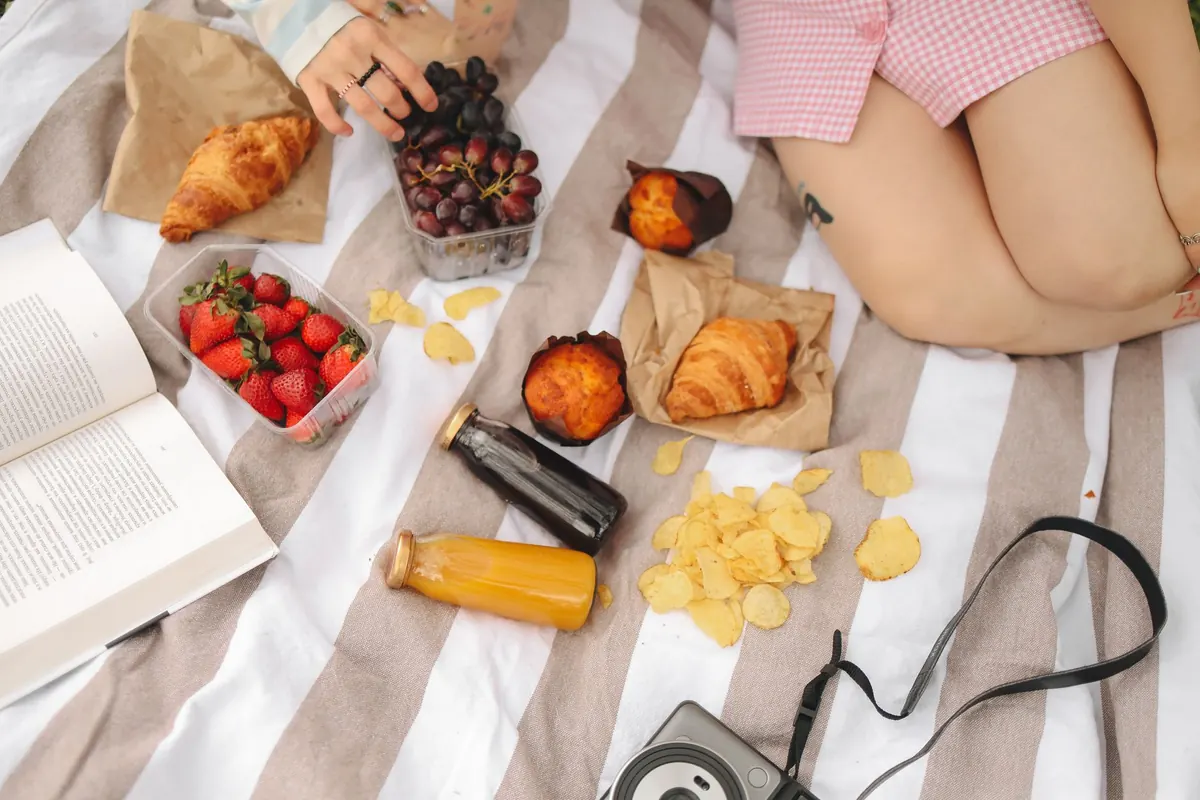
An English picnic is an act of optimism. You pick the one afternoon the forecast calls "light showers", carry a rug across a field that squelches faintly, and sit down anyway. The trick is not to gamble on the weather but to plan around it. Get the food, drink and kit right, and a grey sky becomes part of the charm rather than a reason to go home.
Start with the forecast, then choose the spot
Check the forecast the night before and again as you leave. Anything beyond 24 hours is a rough guess, so treat a five-day outlook as a hint rather than a promise. Wind matters as much as rain: a gusty day will send paper plates, napkins and crisp packets heading for the next county.
Then pick somewhere that gives you options. A wall, a hedge, a bandstand or a line of trees buys shelter from both wind and drizzle, and a site with a car park in sight means a quick retreat if it turns. Coastal spots need one extra check — tides change the beach you planned to sit on, and a rising tide moves faster than most people expect.
The kit worth carrying
Most picnic failures are kit failures. A rug that lets damp through, a knife left at home, nothing to put the rubbish in. This is the shortlist that earns its place in the boot.
- A backed picnic rug or groundsheet — foil-backed or waterproof-backed, not a thin wool blanket. Add a second smaller blanket for shoulders.
- Low folding chairs for anyone who struggles to get up from the ground.
- Lidded containers in two or three sizes, plus small pots for dips and dressing.
- Plates, cutlery and beakers with lids. Melamine or enamel survives a car boot; lidded beakers survive a breeze.
- A bottle opener, corkscrew, sharp knife and small chopping board.
- Cloths: a tea towel, kitchen paper, wet wipes and hand sanitiser.
- Two bin bags — one for rubbish, one as an emergency rain cover or dry seat.
- A flask and an insulated bottle.
- A cool bag with frozen ice blocks, not loose ice.
- Sun cream and insect repellent, even under cloud.
- A compact umbrella, a light waterproof and a few pegs if you use a tablecloth.
- A small first aid kit with plasters and antiseptic wipes.
Food that survives the journey
The best picnic food tastes good at room temperature, travels flat and needs no assembling on a windy rug. Think about the journey before you think about the menu.
Savouries
- Pork pie, sausage rolls and Scotch eggs — the traditional trio, and traditional for good reason.
- A quiche or savoury tart, cut at home and carried in its tin.
- Cold roast chicken or sliced ham, wrapped well.
- Cheddar, a soft cheese and butter, with oatcakes, crackers or a bloomer cut into thick slices.
- Cherry tomatoes, radishes, cucumber sticks, and crisps decanted into a rigid tub so they arrive as crisps.
- Potato salad dressed with vinaigrette rather than mayonnaise if it will sit out for a while.
Sweets
- A Victoria sponge or traybake, carried in the tin.
- Flapjacks, brownies and shortbread, which improve rather than suffer in a rucksack.
- Strawberries in a lidded box, and scones with jam and clotted cream kept in the cool bag.
Leave delicate leaves, sliced avocado and anything needing last-minute assembly at home. Chocolate will melt; ice cream will not survive the walk.
Drink, and keeping it cold
A flask of tea is the most British item on this list and it earns its place. Fill it with boiling water first, let it stand a minute, tip that out, then add your tea or coffee — it will still be hot three hours later. For cold drinks, half-fill bottles with water and freeze them overnight; they double as ice blocks and thaw into drinking water.
Take more water than you think you need, especially with children or a dog in the party. Alcohol is fine in moderation, but check the rules for the site: many parks and beaches have local restrictions on glass and on drinking in public, and signs at the entrance will tell you. If you are driving, the simplest approach is not to drink.
Packing order, so nothing gets squashed
- Rug and groundsheet at the bottom of the bag, or strapped outside.
- Heavy items — drinks, cool bag, flask — centred against your back in a rucksack.
- Food containers next, packed tightly so they cannot slide.
- Soft kit — tea towel, napkins, spare jumpers — around them as padding.
- Bread, cake and anything crushable on top, where nothing rests on them.
If you are walking more than ten minutes, split the load between two people rather than arriving with a bag you cannot lift. In the car, keep a spare blanket and a bag of picnic basics in the boot all summer.
If the weather turns
A shower does not have to end the picnic. Move to the car and use the open boot as a table, or find a bandstand, bus shelter or a pub garden with a covered corner. A lightweight tarpaulin can be strung over a gate for a makeshift roof, and a bin bag makes a dry seat in seconds.
Two points worth remembering. Do not shelter under an isolated tree in a thunderstorm, and keep clear of open water and metal fences while it is overhead. If food has sat out in warm weather for more than a couple of hours, throw it away rather than risk it. If you are pregnant, elderly, or living with a condition that affects what you can eat, take advice from your GP, midwife or pharmacist about chilled and reheated foods.
The night before: a ten-minute check
Freeze the ice blocks. Pre-heat and fill the flask. Put the rug, chairs, first aid kit and bin bags in the car so the morning is only about food. Charge a power bank, check the forecast once more, and read the small print for the site — whether dogs are allowed, whether disposable barbecues are banned, and what time the gates shut.
In the morning, pack the food into the cool bag last, keep it out of the sun on the journey, and take a final look at the sky. If it looks doubtful, take the umbrella anyway. Half the pleasure of a British picnic is sitting under it with a pork pie, pretending this was the plan all along.
Photo: Polina Tankilevitch / Pexels